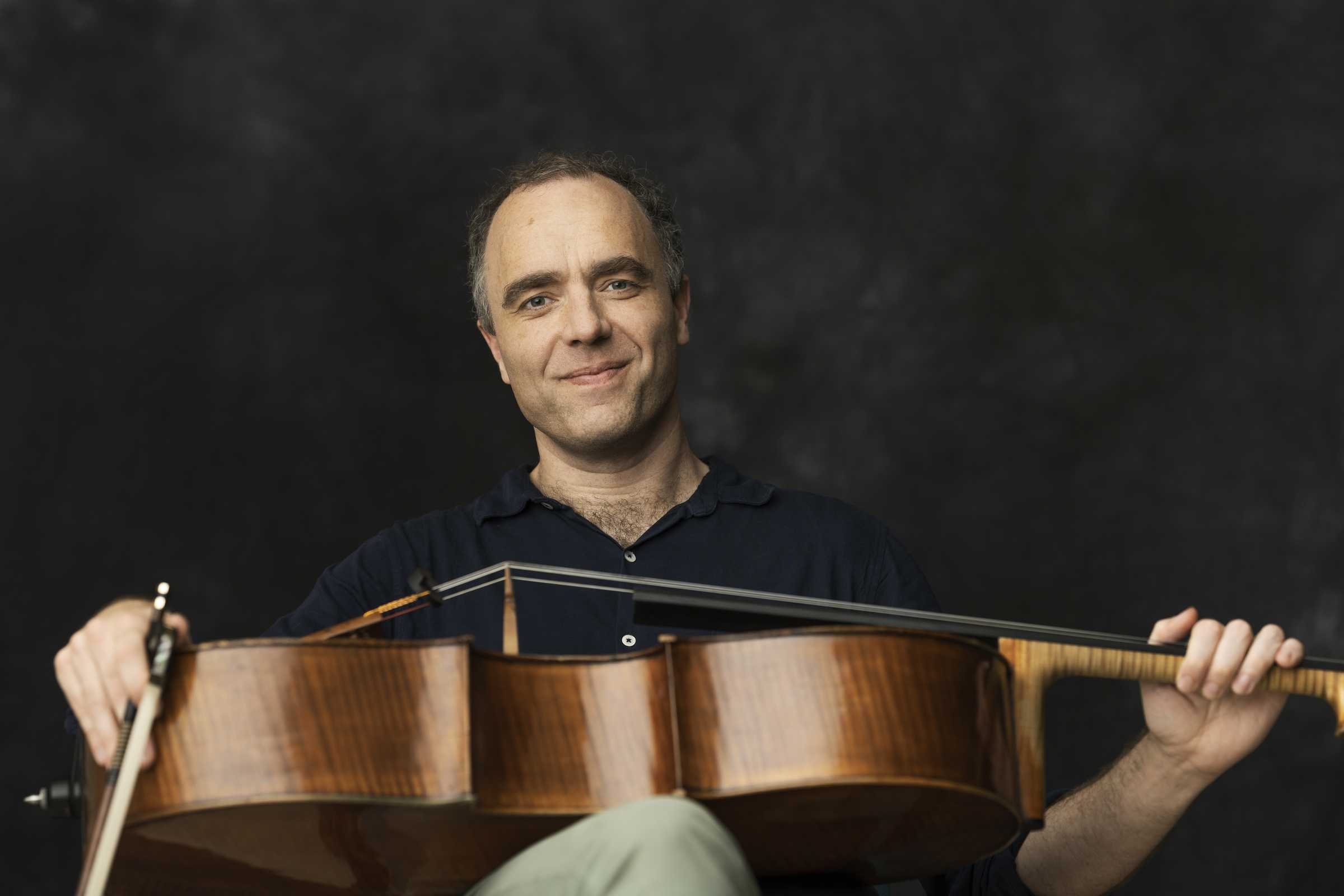
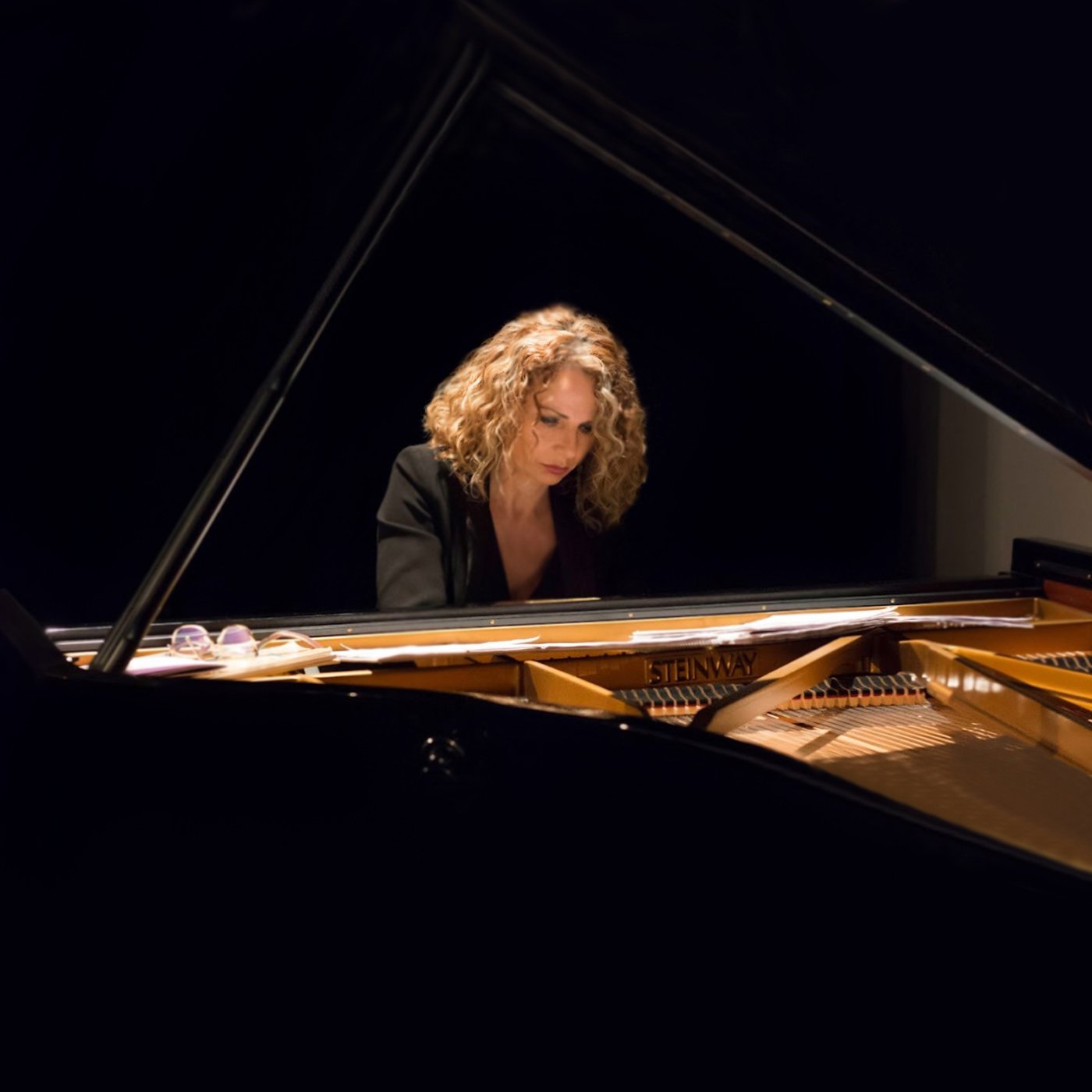
adrian brendel (cello) with Joanna macgregor (Piano)
Date: Tuesday, 21 July
Time: 7.30pm
Venue: St Mary’s Church, Petworth
Tickets: £34.50 (adults & under 18s)
All ticket prices include a £1.50 booking charge with a maximum booking charge of £7.50 per reservation.
Debussy Sonata for cello and piano in D Minor L135
Brahms Cello Sonata No 1 in E Minor Op38
Interval
Franck Sonata No 1 in E Minor
Piazzolla Le Grand Tango
This event is generously supported by Jonathan & Claudia Golden
PROGRAMME NOTES
Sonata for Cello and Piano Sonata in D minor, L 135 - Claude Debussy (1862-1918)
1 Prologue: Lent
2 Sérénade, Modérément animé 3
Finale, Animé
Having completed a significant series of keyboard and orchestral masterpieces and his opera Pelléas et Mélisande, Debussy returned to chamber music during his final years. His Sonata for Cello (1915) was one of a group of six works planned for different instrumental combinations and was written during a summer stay in Normandy against a background of deteriorating health. Lasting no longer than twelve minutes, the Sonata is one of Debussy’s most enigmatic and elusive works. Within its three linked movements he evokes the spirit of the Commedia dell’arte, initially intending to call the work Pierrot fâché avec la lune (Pierrot shakes his fist at the moon). Something of this theatricality exists in the central ‘Sérénade’, marked to be played fantasque et léger (whimsically and lightly) and notable for its ghostly pizzicato suggestive of the plucking of a harp or guitar. The opening ‘Prologue’ inhabits a searching, restless eloquence in the manner of a soliloquy, and enfolds a dramatic central interlude. High spirits are evident in the capricious ‘Finale’, although the unbuttoned mood is absent in contrasting episodes, one of which is marked molto rubato con morbidezza.
Cello Sonata No.1 in E minor, Op. 38 - Johannes Brahms (1833-97)
1 Allegro non troppo
2 Allegretto quasi menuetto
3 Allegro
Brahms’s Cello Sonata No. 1 in E minor was completed in 1865; its sober atmosphere reflecting the recent death of his mother and coinciding with work on his German Requiem. The expansive first movement opens with the cello’s song-like theme, variously brooding and tender, heard against the piano’s halting chords. An impassioned idea soon develops (note the canon between the cello and the pianist’s right hand) followed by a restful rocking motif by way of a coda before the return of the opening material. Thereafter, the mood remains serious until a shift to E major casts a wintery sunshine on proceedings. Brahms’ decision to abandon an earlier ‘Adagio’ movement is replaced by a wonderfully lilting, almost coquettish Intermezzo full of Viennese charm. Its central Trio is more wistful, suave in its melodic sinuousness and with artful cross-rhythms. For the vigorous Finale Brahms turns to J.S. Bach and borrows from his magisterial The Art of Fugue in a movement rich in contrapuntal writing. That Brahms can fashion a masterful fugue within a sonata is a measure of his ingenuity, and typical of a composer who can lift music from the past for his own expressive ends.
Sonata No. 1 in E major - César Franck (1822-1890)
1 Allegretto ben moderato
2 Allegro- Quasi lento – Allegro – Poco più
3 Recitativo – Fantasia
4 Allegretto poco mosso
Had César Franck died at the age of fifty he would not have composed most of the music for which he is best remembered. Much of his career was devoted to teaching at the Paris Conservatoire and playing the organ at Église Sainte-Clotilde in the 7th arrondissement. Consequently, his compositional voice was only fully realised during his last decade, to which belongs this much-celebrated Sonata originally conceived for violin in 1886. Its public premiere, later that year, was given by the composer and the Belgian violinist Eugène Ysaÿe who performed the work in Brussels’ Museum of Modern Painting where regulations forbade any artificial light. After the Sonata’s opening ‘Allegretto’, Vincent d’Indy recalled, ‘the performers could scarcely read the music … then, unheard-of marvel, the two artists, plunged in gloom … performed the last three movements from memory…’.
The floating serenity and reflective calm of the Sonata’s first movement serves as an introduction to the turbulent second movement with its virtuoso piano part. A slow rhapsodic third movement muses on themes already heard whilst anticipating themes of the Finale – its renowned initial melody is a prized example of a canon where two instruments follow each other in perfect imitation. The theme is a direct descendant of the Sonata’s opening idea and, as the music proceeds, earlier themes are recalled and drive towards a thunderous close. Originally conceived for violin and repurposed for cello by Jules Delsart, the work has been described as ‘the first and purest model of the cyclic treatment of themes in the form of an instrumental sonata’.
Le Grand Tango - Astor Piazzolla (1921-1992)
While the Franck sonata was dedicated to the great Belgian violinist Eugène Ysaÿe, it was Mstislav Rostropovich to whom Astor Piazzolla dedicated Le Grand Tango. The Russian cellist was not immediately drawn to the work’s blend of South American dance music and Gallic elegance, but he eventually performed the work in 1990 some eight years after its completion. A haunting melancholy pervades much of this tango-dominated score, its three parts unfolding from heavily accented rhythms, rhapsodic musing and on to an explosive final furlong – a technical tour-de-force of eye-watering challenges over the pianist’s funky piano part.
Adrian Brendel partners Petworth favourite Joanna MacGregor.
Adrian’s musical provenance is of course exceptional as the son of one of the all-time greats, pianist Alfred Brendel, but his CV stands entirely on its own.
Adrian studied the cello with William Pleeth with whom he developed a deep attachment to chamber music. He then went on to study with Alexander Baillie and Frans Helmerson in London and Cologne, also frequently attending the masterclasses of Gyorgy Kurtag, Ferenc Rados, members of the Alban Berg quartet and his father. An acclaimed recording of Beethoven’s cello sonatas with Alfred is available on the Philips label, recorded during a run of recital tours between 2004/5.
Joanna is herself one of the UK’s most accomplished pianists whose trademark is the extraordinary range of her musical interests. As the Professor of Piano at the Royal Academy of Music she has also played a key part in developing and promoting the work of the RAM pianists who have appeared at the Festival in recent years.