ned bigham 60th birthday concert with the london conchord ensemble
Date: Wednesday, 22 July
Time: 7.30pm
Venue: St Mary’s Church, Petworth
Tickets: £34.50 (adults) £11.50 (under 18s)
All ticket prices include a £1.50 booking charge with a maximum booking charge of £7.50 per reservation.
PROGRAMME NOTES
Fantasia on Greensleeves - Ralph Vaughan Williams (1872-1958)
Vaughan William’s lifelong preoccupation with English folksong was to shape numerous works from his Three Norfolk Rhapsodies (1905-6) through to his Folk Songs of the Four Seasons (1949). Amongst his most popular incorporation of folk material is the Fantasia on Greensleeves, originally forming a brief episode from his opera Sir John in Love. This wonderful miniature, in an arrangement by Ralph Greaves, draws on the familiar tune of the title and the melody ‘Lovely Joan’ that Vaughan Williams had encountered many years earlier in Suffolk.
Introduction and Allegro - Maurice Ravel (1875-1937)
The perfumed sonorities of this ten-minute chamber work bears comparison with the languor found in Debussy’s Prélude à ‘L’après-midi d’un faune. Scored for the unusual combination of harp, flute, clarinet and string quartet, the Introduction and Allegro was commissioned in 1905 by the Paris-based Érard manufacturers to promote the capabilities of the newly developed double-action pedal harp. The work unfolds from two ideas; one from flute and clarinet, the other stated immediately afterwards by the strings. Thereafter, it is the subtle alternation and sharing of these ideas within changing contexts and moods that makes this exquisitely crafted work such a masterpiece. That it is also regarded as a miniature harp concerto comes as no surprise.
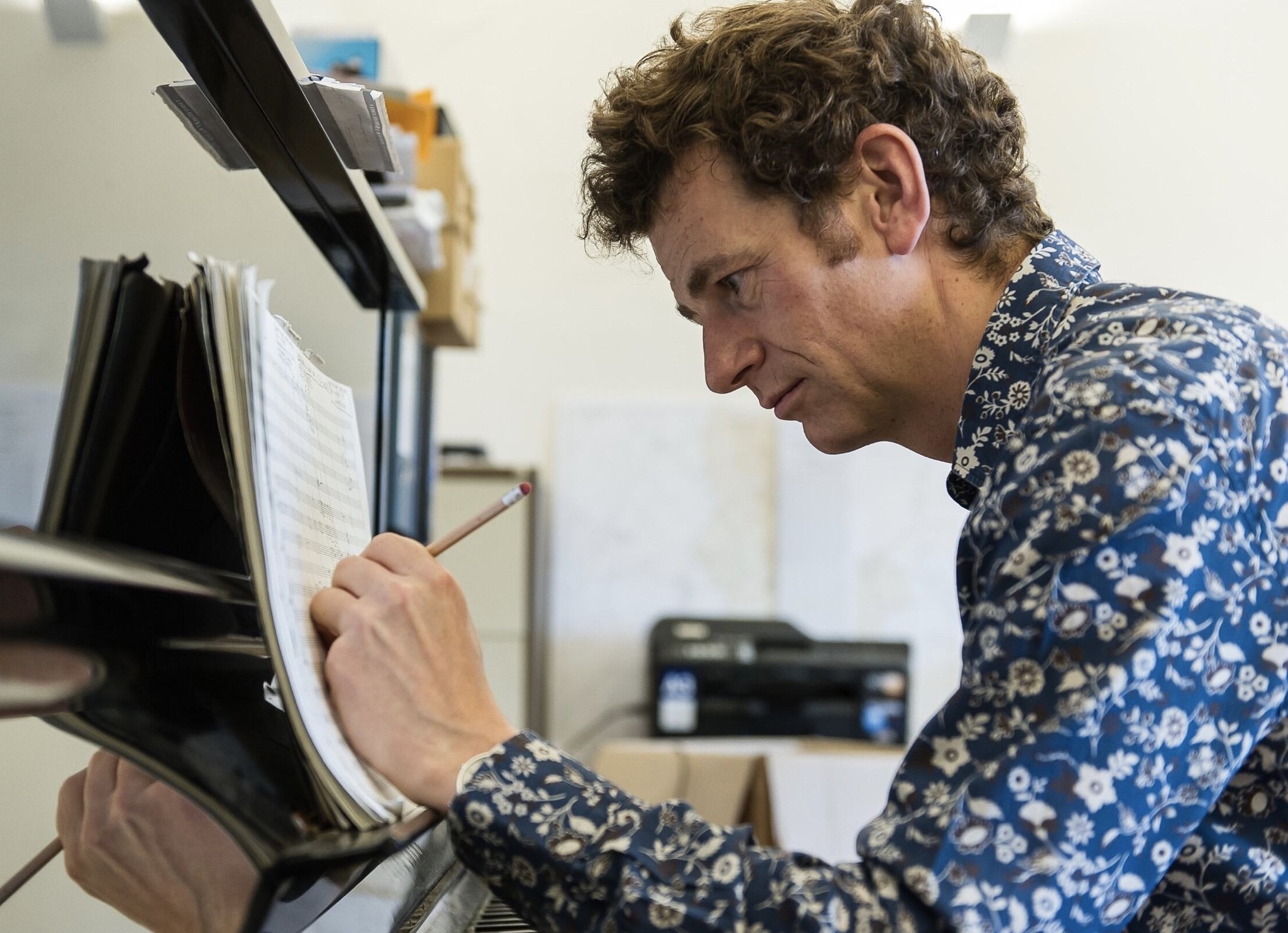
The South Downs Suite (60th birthday commission) - Ned Bigham (b. 1966)
Ned Bigham writes:
This commission for nonet (flute/piccolo, oboe/cor anglais, clarinet/bass clarinet, harp, piano and string quartet) is inspired by a section of the South Downs close to Petworth, from Barlavington in the West to Amberley in the East. As well as living here beneath the South Downs for the past sixteen years, much of my childhood was spent wandering across and around them.
Ah, hills beloved! - where once, a happy child,
Your beechen shades, "your turf, your flowers, among,"
I wove your bluebells into garlands wild,
And woke your echoes with my artless song.
Charlotte Turner Smith: from ‘To the South Downs’ (1782)
Barlavington Down
From the north, steep escarpments rise up, and the walker is rewarded with spectacular views on gaining the summit. This movement begins with a drone in the viola and a steady rhythmic figure in the violins, perhaps echoing the ascent. The piece then opens out with a sense of joy and release as the walker reaches the top, before the figure returns and the traveller gradually slows to reflective rest.
Eartham Wood
This wood is dark and deep, with nothing but the sounds of birds and wildlife for company. I have sought to convey a sense of its mysterious and penumbral qualities, contrasts of light but mainly shade.
Amberley Brooks
The movement opens with a piano ostinato depicting the flow of the Arun at Amberley. As the river grows, the music intensifies, reflected through fuller orchestration and triplet ostinatos. We are then transported upstream, where a slower pace mirrors the wild brooks, with their ‘lorn echoes’ (Smith), pools of still water and streamlets. These gradually feed back into the mighty ‘Aruna’.
Coldharbour
This farmstead nestles in a coomb closed in by steep slopes, just above the villages of Sutton and Bignor. The movement is intended to evoke a sense of safe return home but also a sense of cool beauty contemplated, an attempt to capture the tension between life’s warmth and hibernal qualities.
Interlude for Oboe and String Quartet, Op. 21 - Gerald Finzi (1905 -1955)
Although born to Italian German parents, Gerald Finzi’s music is quintessentially English, its elegiac strain having some kinship with Edward Elgar. Finzi’s gentle character and preference for living in rural locations in Gloucestershire, Wiltshire and finally Hampshire left an indelible imprint on his music, much of which grows from a lyrical impulse and marked by a particular sensitivity. His Interlude for Oboe and String Quartet is a relatively early work that began life as a commission in 1930 for an oboe concerto but was eventually transformed into a single movement structure completed three years later, shortly before his marriage. Despite its self-effacing title the Interlude has some expansive thematic material, often emotionally charged, with rhapsodic gestures that anticipate his solo cantata Dies Natalis.
Piano Quintet in A minor, Op. 84 - Edward Elgar (1857-1934)
1 Moderato - Allegro
2 Adagio
3 Andante – Allegro
Elgar’s chamber music is arguably the least known area of his output and includes from his youth several works written for himself and wind-playing friends to perform in his garden which he described as ‘shed music’. Thirty years later he began sketches for three chamber pieces in the autumn of 1918: a string quartet, a violin sonata and this Piano Quintet in A minor. The latter was begun in September while he and Lady Elgar, weary and depressed by the war years, had retreated to ‘Brinkwells’ in the heart of Sussex. By the following January the work was finished, and his wife’s diary commented on its ‘wonderful weird beginning’ and a ‘reminiscence of sinister trees’. This observation refers to the fascination Elgar had for a group of gaunt-looking trees near their rented cottage. According to the violinist W.H. Reed they invoked a legend about a group of Spanish monks who were struck down while dabbling in the occult.
Elgar commented on the Quintet’s first movement as ‘ghostly stuff’. Indeed, it begins ominously with a plainsong-like melody outlined by the piano in bare octaves, framed by halting string interjections. A plaintive string passage leads to the main ‘Allegro’ characterised by two themes: one assertive, the other hesitant. The benign second idea expands into a broad string melody; its cumulative tensions developing into a turbulent passage where a disturbing version of the hesitant theme is heard. As the music subsides, the broad melody is recalled, and the movement closes with reminiscences of the opening.
The ‘Adagio’ is one of Elgar’s most heartfelt creations in which a withdrawn, hymn-like theme is unveiled from the viola. A new idea soon emerges, based on the nostalgic tune derived from the first movement, and builds towards a passionate climax. The finale begins calmly, but a self-assured theme emerges, and it is within this confident mood that the work concludes.
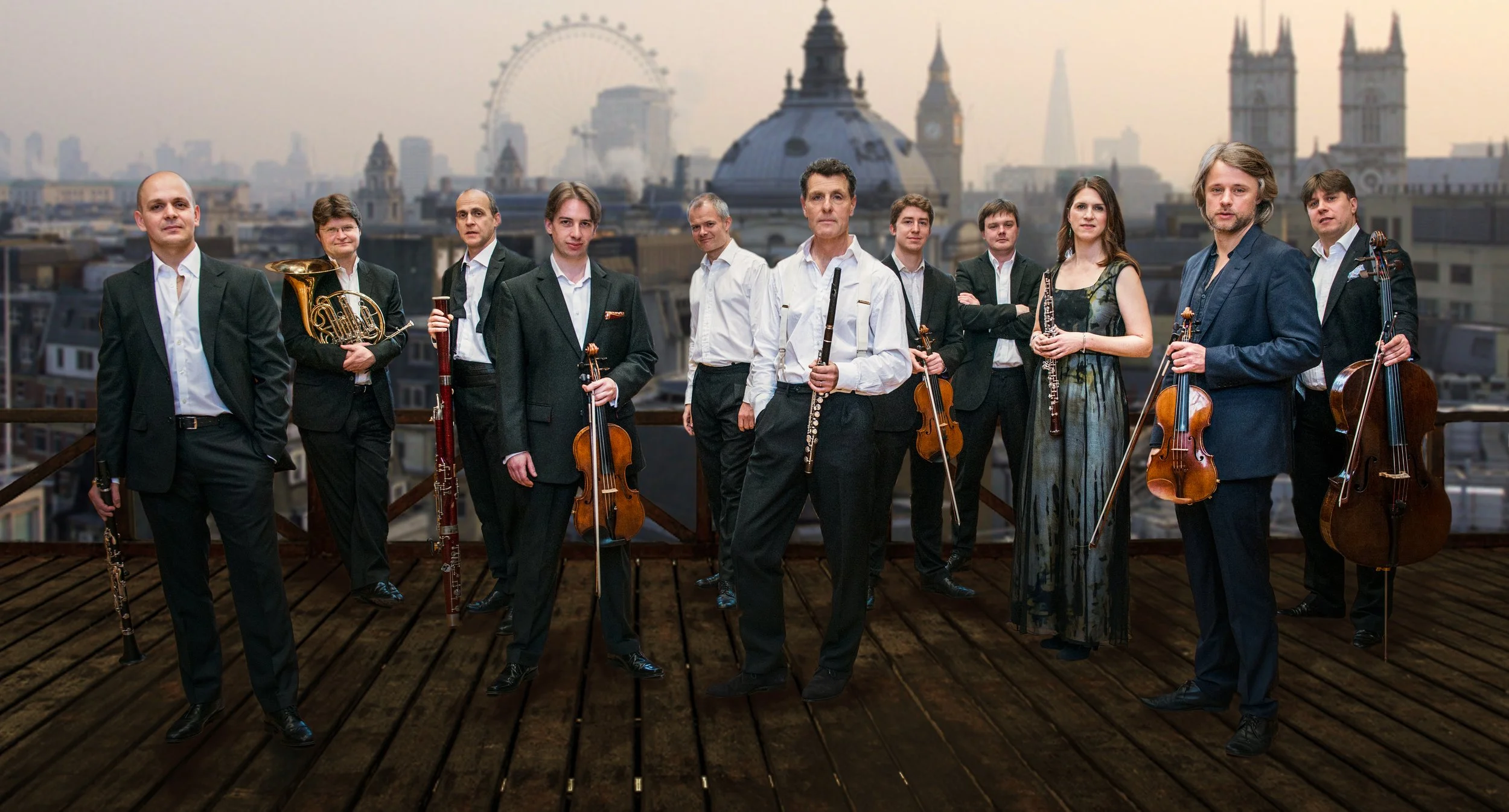
One of Europe’s leading chamber ensembles, the London Conchord Ensemble, helps the Festival celebrate the 60th birthday of composer Ned Bigham - known locally to many as Ned Mersey. In addition to a specially commissioned nonet that thematically reflects on the local West Sussex countryside and environment, The South Downs Suite, the crack ensemble of top musicians have crafted an exquisite programme of English music paired with one of the high-points of 20th century chamber music, Ravel’s Introduction and Allegro - “ten minutes of pure musical bliss” in the words of Artistic Director Stewart Collins.
An old friend of the Festival, The London Conchord Ensemble has recorded much of its extensive discography in the wonderful recording environment that is Champs Hill’s Music Room.
PROGRAMME
Vaughan Williams - Fantasia on Greensleeves
Ravel - Introduction and Allegro
Ned Bigham - The South Downs Suite (60th birthday commission)
Finzi - Interlude for Oboe and String Quartet Op. 21
Elgar - Quintet in A minor for Piano and String Quartet, Op. 84
Daniel Pailthorpe - flute
Emily Pailthorpe - oboe James Burke - clarinet
Michael Foyle - violin Elizabeth Bass - harp
Tom Aldren - violin
Simone van der Giesen - viola. Thomas Caroll - cello
Julian Milford - piano